 Ahmed Al-Barghash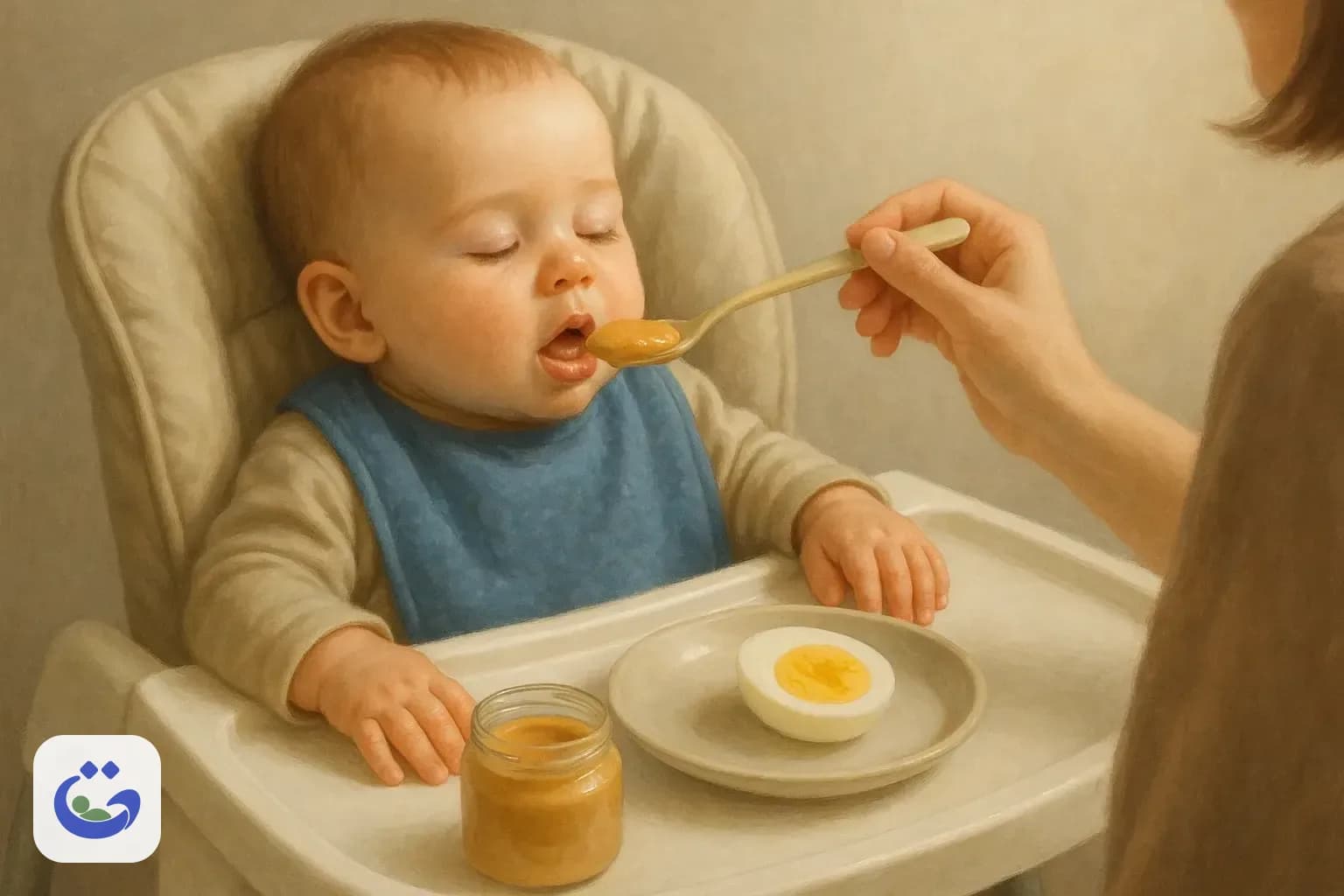
This translation was generated automatically
Allergenic foods can be introduced to a baby early, such as peanuts and egg, when the child starts solid foods, and this is often around 6 months. This does not mean rushing. It means offering them safely and in small amounts, while watching for any reaction.
When do I start giving peanuts and egg to my baby?
Current guidance recommends introducing allergenic foods to a baby early, at about the same time as solid foods are introduced, usually between 4 and 6 months, when the baby is ready to eat. There is no need to delay peanuts or egg out of fear of allergy in most children.
But there is an important condition: the baby should be able to sit with good support, open their mouth for food, and push less food back out with their tongue. If your baby is still not ready for solids, wait until they are ready.
How do I offer peanuts safely?
Peanuts must be given in a very safe form. Never give whole peanuts or hard pieces or thick peanut butter straight away, because they can cause choking, which means blocking the airway.
The best options are:
- very smooth peanut butter thinned with a little warm water, or
- peanut powder mixed into puréed food, or
- baby food that contains peanut in a smooth form suitable for the age.
Offer a very small amount the first time. Make sure the baby is sitting and watch them while they eat. If they accept it, it can be given again later as part of their usual foods.
How do I offer egg to a baby in the right way?
Egg should be well cooked. Raw or half-cooked egg is not suitable for a baby. It can be offered mashed or scrambled and cooked well until it is safe and easy to chew.
Start with a small amount. You can mix it with mashed vegetables or cereals suitable for babies. As with any new food, offer it at a time when you are able to watch the baby, not when you are rushed or away from home.
Should I offer more than one new food on the same day?
The best approach is one new food at a time. That way, if a rash, vomiting, or any other sign appears, you will know the likely cause more easily.
You do not need many days between each food for every child, but it is practical to leave one or two days between new foods if you want to know what caused a reaction. This is especially important with peanuts and egg at the beginning.
If you want to organise the meals you have tried with your baby, it may help to record feeding and food to track what was given and when.
What signs may mean an allergy?
Food allergy usually appears within minutes to 2 hours after eating. The signs can be mild or more obvious. Watch for:
- skin rash or red spots
- swelling of the lips, face, or tongue
- vomiting or repeated throwing up
- cough or wheezing in breathing
- trouble breathing
- unusual sleepiness or severe weakness
Not every skin rash means allergy, but any sign that appears after a new food deserves attention. Stop the new food and watch the baby closely.
What should I do after the first time if nothing happens?
If the baby eats peanuts or egg and there is no reaction, that is a good step. But offering it once is not enough. It is helpful for this food to be part of their diet regularly and repeatedly, because continuing matters more than the one trial.
Babies vary in acceptance. Some taste it quickly, and some need more tries. The important thing is to keep offering it calmly and simply, without forcing.
If your baby is eating other foods as well, tracking the baby's growth measurements may help you see the overall picture of growth over time, not just weight on one day.
When should I speak to the doctor before starting?
There are some children for whom it is better to discuss giving peanuts and egg with the doctor first, especially if they have severe eczema, which means severe dryness and inflammation of the skin, or if they already have a known allergy to another food.
This does not mean peanuts or egg are always forbidden, but it does mean the plan should be clearer before starting. The doctor may guide you to the best method and safest timing based on your child's health history.
When should I see the doctor because of peanuts or egg?
See the doctor if any sign of allergy appears after food, even if it is mild, or if the symptoms happen more than once. Also see them if you are not sure about the safe form to offer, or if the baby has severe eczema or a known allergy already.
Seek medical help immediately if any of the following happens:
- trouble breathing or wheezing
- swelling of the lips, tongue, or face
- repeated vomiting with clear sleepiness
- a severe widespread rash with other symptoms
- blue lips or face
- loss of consciousness or difficulty waking the baby
FAQ
Should I wait until 1 year old to give peanuts or egg?
No, there is no need to wait for most children. Allergenic foods can be introduced to a baby early when solids start, usually around 6 months, and in a safe way. The important thing is that the baby is ready to eat and that the peanuts and egg are in a form suitable for the age.
Should I give peanuts whole or as small pieces?
No. Whole peanuts and hard pieces are not safe for babies because they can cause choking. It is better for peanuts to be in the form of very smooth peanut butter thinned out, or powder mixed with puréed food, so it becomes easy and safe to swallow.
Is raw or half-cooked egg suitable for a baby?
No, egg should be well cooked before it is given to a baby. It can be offered mashed or scrambled and fully cooked. This makes it easier and safer to eat, especially at the beginning when the baby is still getting used to food.
What should I do if a rash appears after the first time?
Stop the new food and watch the baby. A rash after eating may be a sign of allergy, especially if it comes with vomiting, swelling, or coughing. If the symptoms are severe or breathing becomes difficult, this is a situation that needs urgent medical help.
Common questions
- Should I wait until 1 year old to give peanuts or egg?
- No, there is no need to wait for most children. Allergenic foods can be introduced to a baby early when solids start, usually around 6 months, and in a safe way. The important thing is that the baby is ready to eat and that the peanuts and egg are in a form suitable for the age.
- Should I give peanuts whole or as small pieces?
- No. Whole peanuts and hard pieces are not safe for babies because they can cause choking. It is better for peanuts to be in the form of very smooth peanut butter thinned out, or powder mixed with puréed food, so it becomes easy and safe to swallow.
- Is raw or half-cooked egg suitable for a baby?
- No, egg should be well cooked before it is given to a baby. It can be offered mashed or scrambled and fully cooked. This makes it easier and safer to eat, especially at the beginning when the baby is still getting used to food.
- What should I do if a rash appears after the first time?
- Stop the new food and watch the baby. A rash after eating may be a sign of allergy, especially if it comes with vomiting, swelling, or coughing. If the symptoms are severe or breathing becomes difficult, this is a situation that needs urgent medical help.