
 Ahmed Al-Barghash
This translation was generated automatically
For most babies, teething starts between 6 and 10 months. It can start a little earlier or later, because babies vary. Teething can cause discomfort, drooling and a wish to bite. It does not cause a high temperature or diarrhoea. You can ease the pain in simple, safe ways, keep feeding, and start cleaning teeth from the first tooth.
When do a baby's teeth start to come through?
The first tooth often appears between 4 and 12 months, most often between 6 and 10 months. Some babies get their first tooth after their first birthday. This is often normal.
The two front teeth on the bottom usually come first. Then the two front teeth on the top. Milk teeth are the first set of teeth, and there are 20 of them. They are usually all through between about 2½ and 3 years.
What are the signs of teething in a baby?
Not every baby has every sign. These are the ones parents notice most:
- More drooling than usual. Sometimes a mild rash around the mouth and chin from the wetness.
- A strong wish to chew fingers, toys and anything that reaches the mouth.
- Red or slightly swollen gums where the tooth is coming.
- More fussing and crying than usual, and broken sleep.
- Rubbing the cheek or pulling the ear on the same side.
- Sometimes refusing a feed, or short, broken feeds.
Your baby's temperature may rise slightly. But the American Academy of Pediatrics (AAP) and the UK's NHS are clear: a high temperature, diarrhoea, vomiting and a rash that spreads are not signs of teething. Do not assume teething is the cause. These signs often mean something else, such as an infection, and a doctor needs to check.
How can I safely ease my baby's teething pain?
Simple ways are usually best:
- Wash your hands. Then gently rub your baby's gums with a clean finger for a minute or two.
- Give a firm teething ring that has been cooled in the fridge, not frozen. A frozen ring can be too hard and hurt the gums.
- You can give a clean, damp, cooled cloth to chew on, while you stay beside your baby.
- Gently and often wipe the drool from the face, to reduce rash around the mouth.
- Cuddle and soothe your baby. Being close to you helps more than you may think.
If your baby is very distressed despite all this, ask a doctor or pharmacist about pain relief that suits your baby's age and weight. Do not give any medicine without advice.
What should I avoid during teething?
- Numbing teething gel rubbed on the gums: the American Academy of Pediatrics warns against it for young children. It can cause a rare but serious condition in which the blood carries less oxygen. Its effect also wears off quickly anyway.
- Amber necklaces and teething bracelets: there is no evidence that they ease pain, and they carry a risk of choking and strangling.
- Honey before 1 year old, even rubbed on the gums or a teething ring. It can cause a rare, serious bacterial poisoning in babies.
- Liquid-filled teething rings, because they can crack and leak.
- Sweetened biscuits and hard pieces of food that can break off and cause choking.
When should I start cleaning my baby's teeth, and how?
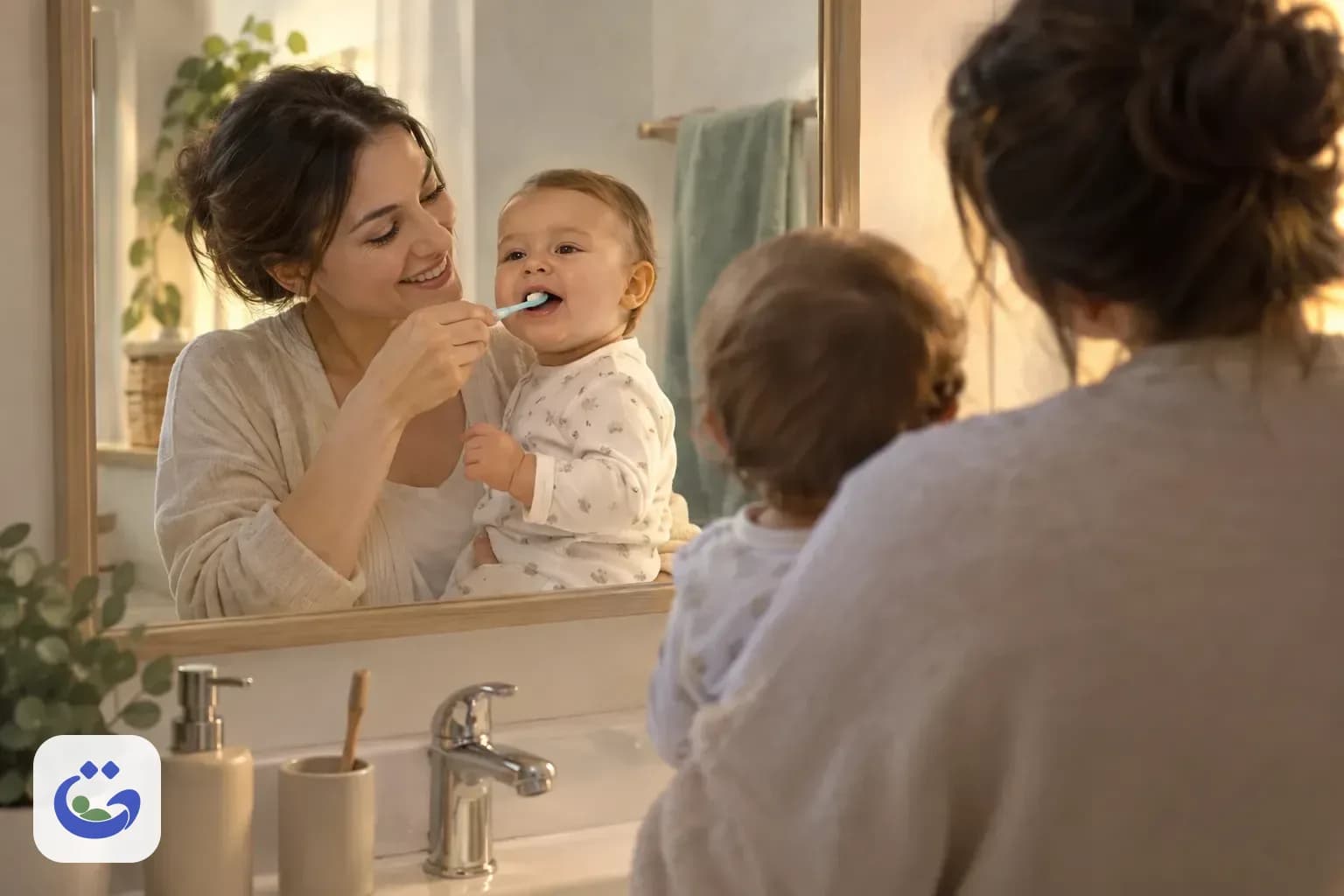
Start before the teeth come through. Wipe your baby's gums once or twice a day with a clean, damp cloth, especially after feeds.
When the first tooth appears, the American Academy of Pediatric Dentistry (AAPD) recommends:
- A small, very soft brush made for babies.
- Toothpaste with fluoride, a mineral that strengthens the tooth surface and protects it from decay.
- Only a smear the size of a grain of rice, up to age 3 years.
- Brushing twice a day, including once before bed.
- No need to rinse afterwards. Just gently wipe away the extra.
For step-by-step detail, read how to start a cleaning routine for your baby's first teeth.
When is the first dentist visit?
The American Academy of Pediatrics and the American Academy of Pediatric Dentistry recommend a first visit when the first tooth appears, or by the first birthday at the latest. The visit is usually short. The dentist checks the mouth, shows you how to clean, and reassures you about any worries.
Should I keep breastfeeding during teething?
Yes. The World Health Organization recommends continuing breastfeeding to 2 years or beyond, along with suitable food. Teething is not a reason to stop. Breastfeeding itself may also soothe your baby.
Your baby may feed less for a few days because of sore gums. Try:
- Rubbing the gums or giving a cold teething ring just before the feed.
- Changing the feeding position. Some positions are more comfortable for your baby.
- Shorter feeds, more often.
Keep an eye on the number of wet nappies. Following your baby's hunger and fullness signs helps you know whether they are getting enough.
What if my baby bites me while feeding?
When a baby feeds well, the tongue covers the bottom teeth, so they cannot bite. Biting most often happens at the end of a feed, when your baby is full and starts to play.
- Watch for the sucking slowing down, and take your baby off the breast before they bite.
- If they bite, put your finger in the corner of their mouth to gently break the latch.
- Say "no" calmly and pause the feed for a little while. A big reaction may frighten your baby, or make them laugh and do it again.
- Most babies learn this within days.
Does sleeping with a bottle harm a baby's teeth?
Yes. Do not put your baby to bed with a bottle of milk or juice. When a baby sleeps with the bottle in the mouth, the liquid stays around the teeth for hours. This raises the risk of tooth decay a lot. This includes formula milk.
- Give the last feed before putting your baby in bed, not while they are asleep in it.
- Once teeth are through, wipe the gums and teeth with a clean, damp cloth after night feeds if you can.
- Babies under 1 year do not need fruit juice. Water and milk are enough.
- If night feeds go up with teething, logging feeds may help you see the pattern clearly and share it with your doctor.
When should I see a doctor during my baby's teething?
See a doctor if your baby is very distressed and cannot be settled by any means, or is clearly feeding less for more than a day or two. Also see one if no tooth has appeared by about 18 months, or if you notice white or brown spots on the teeth. Your baby then needs a paediatrician or a dentist.
Get medical help straight away if you notice:
- Any temperature of 38 °C or more in a baby under 3 months.
- A high temperature at any age, with drowsiness or difficulty waking your baby.
- Signs of dehydration: far fewer wet nappies, a dry mouth, or crying without tears.
- Repeated diarrhoea or vomiting.
- Difficulty breathing, or pale or bluish colour.
- A rash that does not fade when you press on it.
- Non-stop crying in an unusual tone that does not stop.
- Complete refusal to feed.
Trust your instinct. If you feel your baby is not well, that is reason enough to ask for help.
Common questions
- When does teething start in a baby?
- For most babies, teething starts between 6 and 10 months. Some start a little earlier or later, because babies vary. The first tooth often appears between 4 and 12 months. Some babies get it after their first birthday, and this is often normal. The two bottom front teeth usually come first.
- Does teething cause fever or diarrhoea?
- No. Teething can cause discomfort, drooling and a wish to bite, but it does not cause a high temperature or diarrhoea. High temperature, diarrhoea, vomiting and a spreading rash are not signs of teething. These often mean something else, such as an infection. See a doctor to get them checked, rather than assuming teething is the cause.
- Can I give my baby numbing gel or honey for teething?
- No. The American Academy of Pediatrics warns against numbing teething gel. Honey should not be given before 1 year old, even on the gums or a teething ring. Amber necklaces and teething bracelets are not proven to ease pain, and they carry a risk of choking. If your baby is distressed, ask a doctor or pharmacist about pain relief.
- Should I keep breastfeeding during teething?
- Yes. The World Health Organization recommends continuing breastfeeding to 2 years or beyond, along with suitable food. Teething is not a reason to stop. Your baby may feed less for a few days. Try rubbing the gums or giving a cold teething ring before the feed, and shorter feeds, more often. Keep an eye on wet nappies.
- When should I see a doctor about teething?
- See a doctor if your baby is very distressed and cannot be settled, or is clearly feeding less for more than a day or two. See one too if no tooth has appeared by about 18 months. Get medical help straight away for a high temperature with drowsiness, signs of dehydration, or difficulty breathing.
References
- Teething Pain Relief: How to Soothe Your Baby's Discomfort — American Academy of Pediatrics (HealthyChildren.org)