This translation was generated automatically
Tummy time gives your awake baby a chance to practise lifting the head and moving, with you watching closely. You do not need an elaborate play gym or a long session on the first day.
How do I start with my baby?
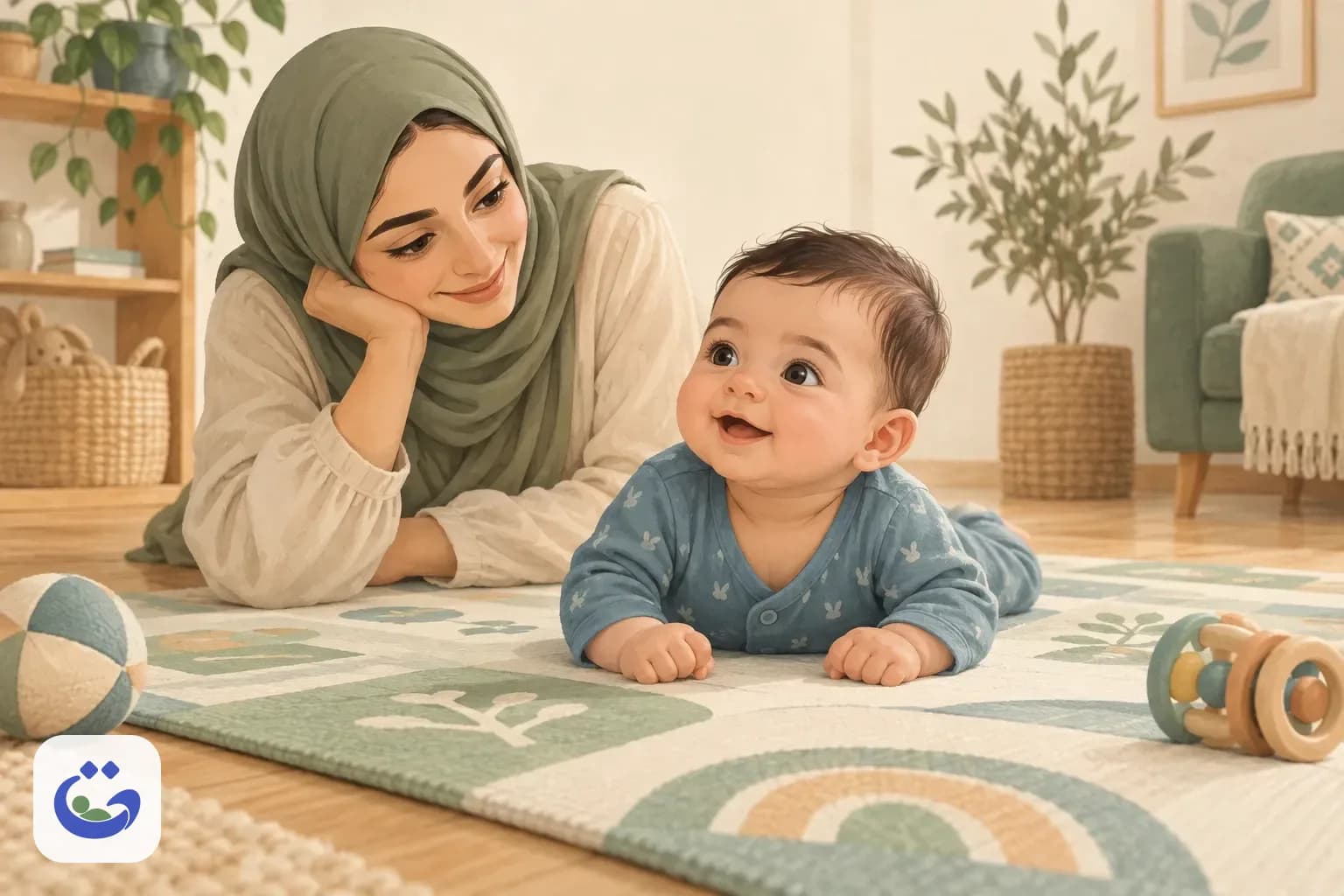
Choose a calm, awake moment. Sit beside your baby on the floor and use a firm, safe surface away from small objects. Start briefly and build up gradually as your baby becomes comfortable.
An early option is tummy time on your chest while you are fully awake, supporting your baby and keeping the face and breathing in view. Ask your clinician for individual advice if your baby was premature or has a health condition.
What if my baby dislikes it?
Crying does not mean you have fallen behind. Pick your baby up, settle them, and try at another time. Bring your face close, talk gently, or put a simple toy within view without covering the face.
- Try several short opportunities through the day.
- Stop when your baby becomes tired or distressed.
- Avoid raised beds and never leave your baby alone.
Is tummy time suitable for sleep?
No. Tummy time is awake play only. If your baby becomes sleepy, move them to a safe sleep space and place them on their back. Watching nearby does not make tummy sleeping safe.
How can this fit into an ordinary day?
Choose a natural gap between activities when your baby is comfortable and you can stay beside them. It might follow a nappy change or happen during quiet floor play. You do not need a fixed appointment or a crowded activity schedule. The aim is a safe opportunity to explore movement, with room to discover what suits your baby.
Prepare the space before placing your baby down and put distracting objects out of reach. Sit where they can see your face and hear your voice. Talk about something nearby rather than changing toys quickly. When they need a break, pick them up and help them settle. Trying again at another comfortable moment is part of learning the routine.
When someone else provides care, share what you noticed: does your baby prefer a face nearby, a familiar voice, or a simple toy? This is more useful than asking everyone to achieve the same session length. Make the difference between awake play and sleep clear. Tummy time does not change the instruction to place babies on their backs for sleep.
What is worth recording?
A short example can capture something new: your baby lifted their head to look at you or reached towards a toy. You do not need to record every attempt or give it a success score. A day without an entry does not mean movement or care was missed. Notes should help memory rather than create another task to finish.
Include the circumstances when they matter. “Sleepy and not interested in play” tells a caregiver more than “hates tummy time”. It may help you choose another opportunity. Describe your own baby's attempts rather than ranking them beside a cousin or a neighbour's child. Ordinary observations are easier to discuss than labels such as ahead or behind.
Keep the experience a comfortable moment together. Allow time to look and move without pressure, and change position when a break is needed. If you discuss a concern with the doctor, bring clear examples and describe movement in other positions too. A play record alone cannot explain your baby's movement or assess every part of development.
What should I notice over the weeks?
Look for small attempts to lift the head, look towards you, and reach. Avoid comparing babies or turning play into a test. Discuss a loss of previously acquired skills or persistent movement difficulties with the doctor.
Keep observations beside your growth measurements in Tamim so you can bring clear examples to a visit. A record supports memory; it does not assess motor development by itself.
Common questions
- How do I start with my baby?
- Choose a calm, awake moment. Sit beside your baby on the floor and use a firm, safe surface away from small objects. Start briefly and build up gradually as your baby becomes comfortable.
- What if my baby dislikes it?
- Crying does not mean you have fallen behind. Pick your baby up, settle them, and try at another time. Bring your face close, talk gently, or put a simple toy within view without covering the face.
- Is tummy time suitable for sleep?
- No. Tummy time is awake play only. If your baby becomes sleepy, move them to a safe sleep space and place them on their back. Watching nearby does not make tummy sleeping safe.
References
- 3 Tummy Time Activities to Try With Your Baby — American Academy of Pediatrics
- How to keep your baby or toddler active — NHS