This translation was generated automatically
Your baby's first teeth need brushing as soon as the first tooth appears, even if it is tiny. The aim is to build a simple habit early rather than waiting for a full set of teeth or independent brushing.
What do I need for brushing?
Use a small soft toothbrush and a rice-grain-sized smear of fluoride toothpaste for children under 3. Choose toothpaste with at least 1,000 parts per million fluoride, following local dental guidance or your dentist's advice.
Put the toothpaste on yourself and store it out of reach. A larger amount does not improve cleaning.
How can I make brushing easier?
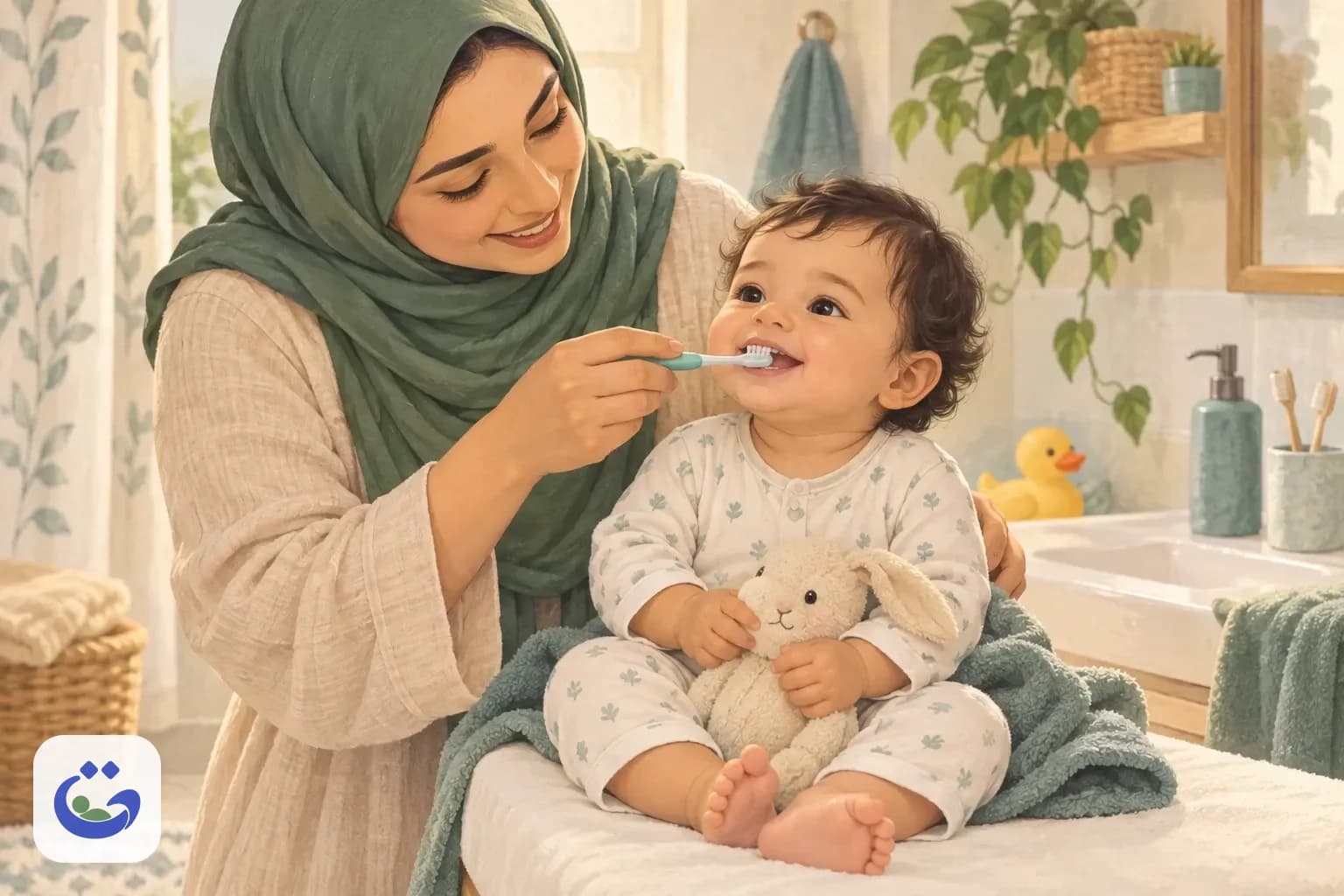
Brush twice daily, including last thing before bed. Sit your child comfortably, support the head, and gently clean the teeth and surrounding gum line. Babies do not need to master rinsing; do not encourage swallowing toothpaste.
Try a short song or let your child hold a second brush while you do the cleaning. If they resist, pause and return calmly. Enjoying imitation does not mean they can clean thoroughly without help.
What about milk and drinks?
Do not add sugar to milk or food. Avoid putting your child to sleep with a bottle in the mouth, and limit repeated sugary drinks between meals. Once solids start around 6 months, offer water with meals in a suitable cup.
How can we build a habit that fits our home?
Keep the supplies in a place adults know, so each attempt does not begin with searching for the brush. Brushing can sit beside a familiar morning and evening step, while an adult remains responsible for applying toothpaste and cleaning the teeth. A simple arrangement makes the approach easier to share without buying a whole collection of products.
Use short, calm words: “We are cleaning your teeth, then getting ready.” Your baby can look at the brush or touch it with you before you begin. They do not have to understand the whole explanation. A familiar voice helps make the activity recognisable. Choose a position where you can see the teeth rather than concentrating only on finishing quickly.
Some days will feel easier than others. If your child becomes upset, take a moment to settle them and return calmly. Avoid turning the brush into a punishment or comparing cooperation with a sibling. When another person handles the evening routine, explain what has happened instead of assuming everyone automatically knows the plan.
What should I check when buying supplies?
An attractive package or cartoon character does not establish whether a product suits your child. Read the brush description and toothpaste information, including the directions. A general label such as “for children” is not the whole answer. If the information is unclear, ask your dentist or pharmacist about the specific product and your child's age.
Keep the instructions available and agree on which adult applies the toothpaste. More accessories do not automatically produce a better routine; similar products can make the choices confusing. Suitable supplies and a clear approach are a practical starting point. When you change products, tell the other caregivers so they do not follow the instructions for an old package.
Prepare questions for the dentist around the difficulty you actually face: choosing a brush, reaching the teeth, or helping your child cooperate. Everyday examples make the conversation useful. Explore shared care in Tamim to coordinate the adults' routine. Recording that brushing happened can support communication, but it does not assess dental health or replace an examination.
When should we see a dentist?
Arrange an early visit after teeth appear according to local recommendations. Seek assessment for pain, swelling, a clear colour change, or an injury. Do not assume every unsettled spell is caused by teething.
Keep the brush with your evening routine supplies and agree on the same approach with other caregivers. A calm, repeated habit matters more than buying many accessories.
Common questions
- What do I need for brushing?
- Use a small soft toothbrush and a rice-grain-sized smear of fluoride toothpaste for children under 3. Choose toothpaste with at least 1,000 parts per million fluoride, following local dental guidance or your dentist's advice.
- How can I make brushing easier?
- Brush twice daily, including last thing before bed. Sit your child comfortably, support the head, and gently clean the teeth and surrounding gum line. Babies do not need to master rinsing; do not encourage swallowing toothpaste.
- What about milk and drinks?
- Do not add sugar to milk or food. Avoid putting your child to sleep with a bottle in the mouth, and limit repeated sugary drinks between meals. Once solids start around 6 months, offer water with meals in a suitable cup.
References
- Looking after your baby's teeth — NHS
- Tooth decay: toothpaste and brushing — Great Ormond Street Hospital, NHS